
For founders and CFOs raising seed or Series A
Financials that already tie
to the books
Real-time, investor-ready, without rebuilding them by hand each quarter. So when Series B diligence starts, you’re negotiating valuation, not defending a spreadsheet.
For investment managers and fund CFOs
A week in the actual ledger
At seed and Series A you don’t commission financial due diligence. Give your investment manager read-only access to the books, for one week, before IC.
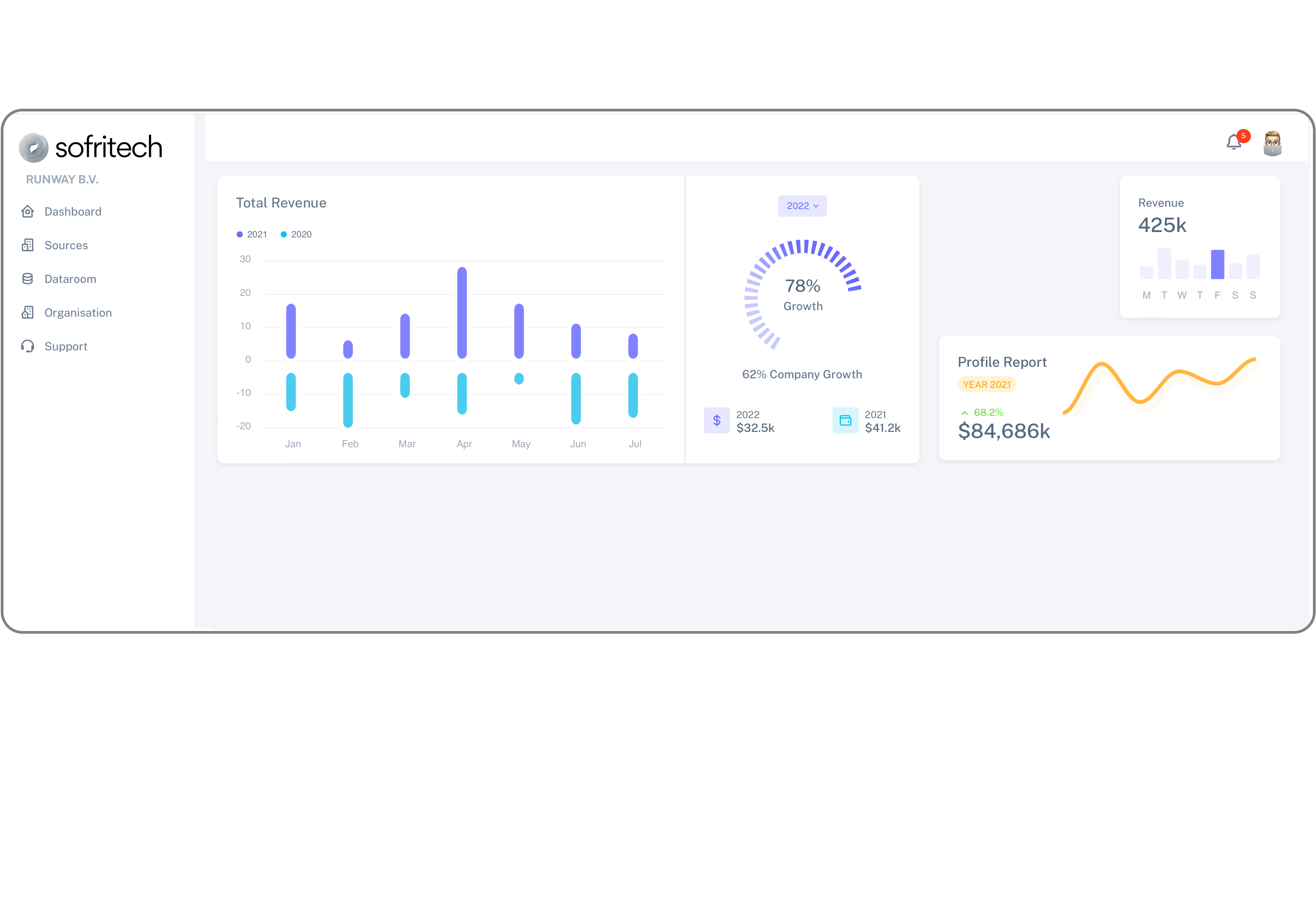
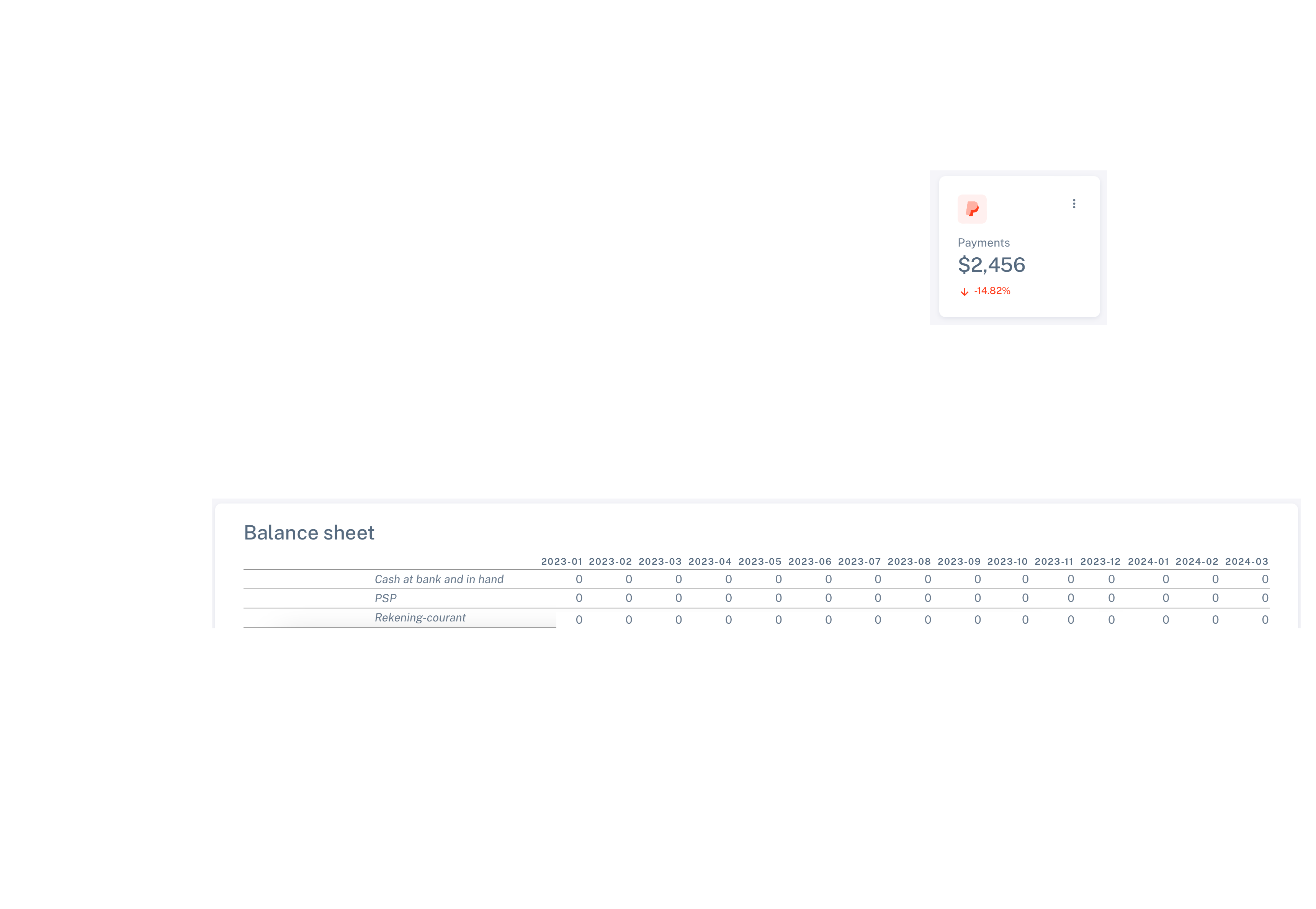
Financial clarity in real time for reporting, forecasting and fundraising.
Always investor-ready. Always up to date.
The round where someone finally checks
Seed and Series A were underwritten on conviction. A partner liked the market, liked you, glanced at a metrics tab, and wired. Nobody asked your accountant anything.
Series B is different. The lead hires a third party. They don’t read your deck. They tie ARR to invoices, invoices to the GL, and the GL to cash in the bank. Every gap becomes a question. Then they pull your Series A plan and compare it, line by line, to what happened.
Failed FDD rarely kills a round. It restates ARR, re-trades the valuation, and adds a week per unanswered reconciliation. Deals die of exhaustion far more often than of rejection.
The gap is almost always the same. You’ve been running two sets of books: the spreadsheet where ARR lives, and the accounting system where the transactions sit. They agreed once, eighteen months ago.
One source of truth, maintained continuously
Sofritech collapses those two stacks. Metrics come from the books, continuously, not rebuilt by hand each quarter. When diligence asks how you get from ARR to the GL, the bridge already exists. You see the 55% concentration six months early, while there’s still time to fix it.
That also means you spend the diligence period negotiating valuation, not defending a spreadsheet.
Answering the request list in seconds, not days
The normal loop is a question, an export, two days, a follow-up. You ask in plain language and the answer comes back from the ledger:
- Monthly revenue for the last 24 months, split by division
- Top ten customers as a share of invoiced revenue
- The GL lines sitting behind that spike in March
- Whether the cash balance ties to the bank entries
- Forecast against actual for FY25, with the budget comparison
- Receivables ageing by bucket, and which debtors are past 90 days
- Headcount and personnel cost trend, aggregated, without exposing individual salaries
- Consolidated P&L and balance sheet across all entities
The advisor asks why gross margin moved in Q3, and instead of writing it down as item 41, you answer while they’re still on the line.
The ask
Start six months before you open the round. Three months is tight. Starting when the term sheet lands is starting too late.
The situation as it stands
At seed and Series A you don’t commission financial due diligence, and you’re right not to. A €50k engagement on a €2m ticket doesn’t make sense, and there usually isn’t enough history to justify one. So the financial review lands on your investment manager, or your fund CFO, for an afternoon.
What they get is a data pack. A metrics tab, a cash flow model, maybe a trial balance export, all prepared by the founder. They sanity-check it, ask two or three questions by email, wait a day and a half for each answer, and form a view. Not because that’s good practice, but because it’s what the deal economics allow.
The exposure isn’t in the diligence you skipped. It’s that nobody has ever connected the reported numbers to the underlying ledger, and at this stage nobody ever will.
What we’re proposing
Read-only access to the company’s accounting data through Sofritech for one week, before you go to IC. Your investment manager asks questions in plain language and gets answers computed from the ledger. No data pack, no email loop, no waiting on their controller.
An afternoon of that gets you further than a week of the current process. The reason seed and Series A diligence stays shallow is time, not curiosity. Your IM has four live deals and a portfolio to support. Every question they ask costs a day of elapsed time and a follow-up email, so they ask the three that matter most and stop.
Direct access removes the per-question cost. If ARR looks high relative to invoiced revenue, they check in ten seconds instead of writing to the company. If the answer prompts another question, they ask it immediately.
At this size that matters more than it would at Series B. There are few enough transactions that one person querying directly can genuinely verify most of what’s being claimed.
The specific things that go wrong at this stage
These are the failures your IM is trying to avoid. Each is a query, not an engagement.
ARR that isn’t ARR
Services revenue, pilots, one-off implementation fees folded into a recurring number. Reconciles in seconds against the subscription ledger and invoiced sales.
Runway calculated on the wrong burn
Usually a good month annualised, or a number that excludes something. Check against actual cash movement and expected outflows.
Cash that doesn’t tie
The balance in the model versus what the bank entries say.
Concentration nobody mentioned
Top customers as a share of invoiced revenue, and the trend across 24 months.
Receivables doing the work
Revenue recognised, cash not collected, ageing quietly deteriorating. DSO trend and anything past 90 days.
Payables being stretched
Suppliers paid late so cash looks healthier than it is. A cash problem wearing a working-capital costume.
A plan already missed
The company’s own forecast against actuals, month by month. If they’re behind, your IM should know before IC rather than at the first board meeting.
For your fund CFO, the value continues after close
This is the part that usually decides it.
Pre-close access is one week. The same connection can stay live through the holding period, which changes portfolio monitoring from a chasing exercise into a query. Your CFO can pull consolidated statements at quarter end without waiting on the company, support a valuation mark with data that traces to a ledger rather than a founder update, and answer LP and auditor questions about a portfolio company without a three-week round trip.
If you’ve ever had a year-end where the audit is held up by two portfolio companies who haven’t sent numbers, you already know what this is worth. It’s arguably a bigger deal for your fund operations than for the deal itself.
What it doesn’t give you
You get knowledge, not recourse. Nobody is signing an opinion or carrying liability. That’s the same position you’re in today, so it isn’t a step down, but it’s worth being explicit.
You get data, not judgment. Whether the revenue recognition policy is defensible, what should be normalised out, how to treat capitalised development costs: those are calls your IM or CFO has to make. Access makes the call fast and well-informed. It doesn’t make it for them.
And it’s financial only. Legal, cap table, IP, commercial reference calls all run exactly as they do now.
Trusted by leading capital providers

Integrates directly with your accounting software
We support all major accounting software, so you can keep using the tools you love.
The company keeps its existing ERP. We connect read-only so your IM queries the live ledger, not a founder-prepared export.





Clear pricing for Founders and CFOs scaling their companies
Choose the plan that fits your growth stage.
For companies that want clean, real-time financial data without manual work

Foundation
Automated real-time financial operations
-
ERP integration
-
Daily automated data imports
-
Accredited processes
-
Standardized financial structure
-
Automated financial reporting
-
Runway & burn visibility
-
For companies actively fundraising or working closely with investors

Deal ready
Investor-ready financial infrastructure
-
Everything in Foundation
-
Data room for investors
-
Contract parsing
-
Structured reporting for due diligence
-
Forecasting
-
Collaborate with investors
What the company on the deal pays
The company covers Sofritech. Referred companies get 3 months free on any plan; after that they choose the tier that fits their stage.
For companies that want clean, real-time financial data without manual work
Foundation
Automated real-time financial operations
ERP integration
Daily automated data imports
Accredited processes
Standardized financial structure
Automated financial reporting
Runway & burn visibility
For companies actively fundraising or working closely with investors
Deal ready
Investor-ready financial infrastructure
Everything in Foundation
Data room for investors
Contract parsing
Structured reporting for due diligence
Forecasting
Collaborate with investors
Get the books ready before the request list arrives
If you’re already in a process, we can still help with the live answering. The quiet work is better done earlier.
Give your IM a week in the ledger
One week of read-only access before IC. The same connection can stay live for your fund CFO after close.
Talk about a live deal